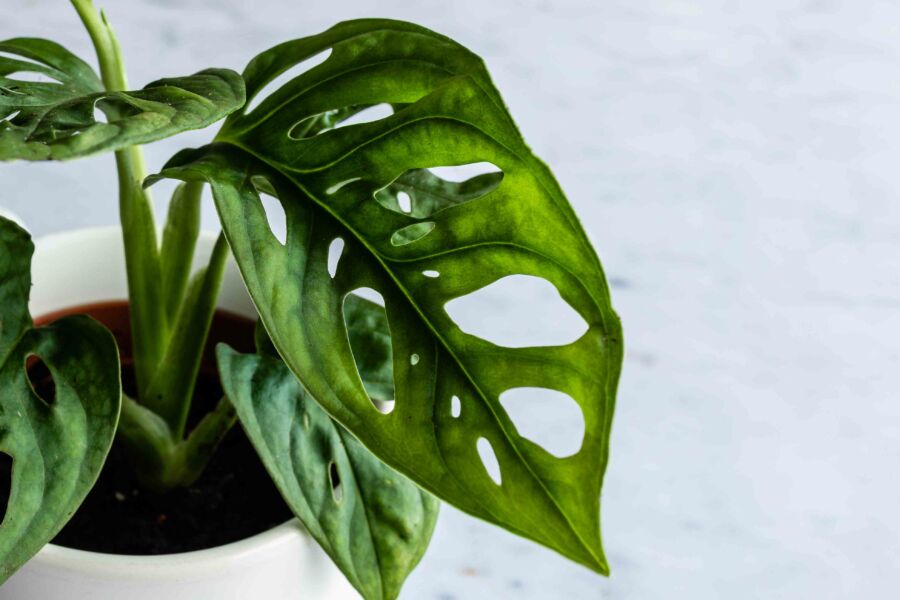
The Swiss Cheese Plant also known as the Monstera is a well-known tropical plant with aerial roots growing from the stem. The roots can easily reach the ground and it offers the plant a vine-like tendency. Plus the Swiss Cheese plant receives its name from the heart-shaped leaves which look like Swiss Cheese. It is native to Native to Central and South America and it is a tropical perennial which is grown as an indoor plant.
Many people love this plant because of its beautiful leaves and its lush growth. If you are growing a Swiss Cheese plant, you can know details on how to grow and care for the plant here.
How to take care of the Swiss Cheese Plant?
The Swiss Cheese Plant is a climber so it needs a stick or a supportive object to grow. It has ariel roots growing downward from the stem. This will brace it against the ground and will allow it to climb and grow around the support. When it is growing in the wild it will use the roots to push itself up in a tree or woody vine.
If you are growing as a houseplant, you can encourage the growth of the plant by inserting its stake in the pot’s centre. Then you have to pour regular water and food to take care of the plant. Also, take care to do some maintenance pruning to keep the plant growing. In the end, the plant will be the size you desire. Know about the following things the plant will need to thrive and grow.
| Common Name | Swiss cheese plant, Swiss cheese vine, five holes plant |
| Botanical Name | Monstera adansonii |
| Family | Araceae |
| Plant Type | Perennial |
| Sun Exposure | Partial |
| Flower Color | White |
| Soil Type | Moist, well-drained |
| Soil pH | Acidic, neutral |
| Bloom Time | Spring (only in outdoors) |
| Hardiness Zones | 10–12 (USDA) |
| Mature Size | 10–13 ft. tall (outdoors), 3–8 ft. tall (indoors) |
| Native Area | Central America, South America |
| Toxicity | Toxic to pets |
1. Natural light for its growth

As the Swiss Cheese plant has a tropical origin it requires a lot of sunlight. So you have to keep the plant in a place where it can get light. But don’t expose it to a lot of sunlight as its foliage can burn easily. You can keep the plant for two to three hours in direct sunlight for the best results.
2. The right amount of soil
The Swiss Cheese plants can grow to their maximum height when you keep them in the peat-based potting mix. It will help you to trap the moisture in the soil and it will not become waterlogged. If you want the soil to grow properly aim to grow the soil in PH between 5.5 and 7.
3. Water gives life to the plant
You have to take care to keep the plants in moistened soil but it must not be watery. Before you are watering the Swiss Cheese plant, you have to stick your finger in the soil an inch deep. If the soil is very dry to touch you have to water the plant. Then create a drain hole in the pot so the excess water can drain out properly.
4. The right temperature
These jungle plants can grow in high humidity and hot temperatures. But the closer you can create the natural conditions for the plant the better it will for its growth. Then you have to keep the plant in a spot that is above 40 degrees Fahrenheit. Also secure the plant against drafts. The humidity level above fifty is the best. You can keep the plant also in your bathroom but it has to be well-lit and warm. If you want to increase the humidity you can use a humidifier in the area.
5. Food for the plant
Fertilizers are readymade food for plants. They offer the nourishment the plant requires so it can grow well. But you have to know at what time to provide fertilisers to the plant. You have to wait four to six months to put the fertiliser on the plant because this is the time when it is ready.
Then after this time, you have to fertilise the plant monthly once. All-purpose fertilisers are also very beneficial for the plant. You have to dilute the liquid by half and use it on the plant.
What are the different types of Swiss Cheese Plant?

There are many species of the Swiss Cheese Plant like-
1. Monstera deliciosa
This species has leaves that are bigger than Monstera Adansonii. It is one of the identities of the species.
2. Monstera borsigiana
It is a smaller plant but it grows more quickly than others in its variety.
3. Monstera obliqua
It is one of the rare species of the Swiss Cheese Plant. It looks similar to the Monstera Adansonii but its leaves are thin and have more holes.
How to propagate the Swiss Cheese Plant?

The simplest method to propagate the Swiss Cheese Plant is by using stem cuttings. It is an inexpensive method to get new plants in your garden. The best time to propagate the Swiss Cheese plant is during the spring.
- You have to trim off a 4- to 6-inch piece of stem. Now cut after the leaf node and it has to stay intact. Remove any kind of leaves on the bottom third and then half of the cutting.
- You can apply a rooting hormone to the end of the cut. It is a product made of chemicals that helps the plant to grow by stimulating its growth. This is a synthetic product that acts to mimic Auxin which is a natural plant hormone that promotes growth. The rooting hormones come in liquid, powder and gel types. You can get tips from a gardening expert to know how to use the rooting hormone.
- Now you have to plant the cutting in the moistened soilless mix. It has to be a small pot with drainage holes. You have to keep it in a warm spot to promote plant growth.
- You have to keep the pot slightly moist so the Swiss Cheese sapling can have well-formed roots. Then you can transfer this cutting to a big pot.
What are the pests in the Swiss Cheese Plant?
The common pest problems that Swiss Cheese can get through the mealybugs, scale, whitefly, spider mites and a lot more. These pests can prove fatal to the plant’s health so you have to use pesticides like nontoxic insecticides or neem oil.
Conclusion
These are some of the tips you can follow to care for your Swiss Cheese Plants. It is one of the easiest plants to grow.
Also read: 10 Best Indoor Plants That Are Most Suited For Being Grown Indoors